Share Article

Salam Qadir
Product & Growth Lead
Jan 12, 2026
You can rank in AI search results by better understanding how AI works, using structured data and language, and creating valuable content.
AI SEO is the practice of optimizing content for AI-powered search systems like ChatGPT, Perplexity, and Google AI Overviews that prioritize entity coverage, structured answers, and source credibility over traditional keyword density.
Success requires creating citation-worthy content with clear formatting, building authoritative third-party mentions, and implementing systematic visibility tracking across multiple AI platforms to measure inclusion and prominence.
Traditional search engine optimization focused on rankings. AI search requires optimizing for citations, source selection, and answer extraction.
Content teams must adapt to how AI systems evaluate trustworthiness, synthesize information from multiple sources, and present answers directly rather than linking to pages.
This guide provides actionable frameworks for becoming the preferred source that AI platforms reference consistently.
Key Takeaways
AI search optimization requires citation-worthy content with entities, attributes, and authoritative sourcing consistently.
Multi-platform strategy essential because ChatGPT, Perplexity, and AI Overviews use distinct ranking algorithms.
Systematic tracking of 30-50 queries weekly identifies optimization patterns and competitive positioning effectively.
Authority building through third-party mentions increases AI platform trust signals and citation probability.
Traditional SEO fundamentals remain critical showing 61-73% correlation with AI search citations.
How AI Search Systems Choose What to Show
AI search systems function fundamentally differently from traditional search engines. Understanding this distinction shapes every optimization decision content teams make.
AI Overviews and Answer Synthesis Explained Simply
Google AI Overviews, ChatGPT Search, Perplexity, and similar platforms synthesize information from multiple sources rather than ranking individual pages. Synthesis means the AI reads several high-quality pages, extracts relevant facts, and composes a new answer combining insights from different sources.
Being a clean source page matters because AI systems evaluate how easily they can extract factual information without ambiguity. Pages with clear definitions, explicit attribute coverage, and well-structured formatting become preferred sources. The AI can confidently cite these pages because extraction accuracy remains high.
Traditional search showed ten blue links. AI search presents one synthesized answer with 3-8 source citations. Your optimization goal shifts from ranking first to being among the cited sources that AI trusts for accurate information.
Why Query Fanout Makes Shallow Content Lose
Query fanout describes how AI systems break complex queries into multiple sub-questions before composing answers. When someone asks “how to optimize for AI search,” the system internally generates sub-queries including “what is AI search,” “which AI platforms exist,” “what ranking factors matter,” and “how to measure success.”
AI platforms run these sub-queries simultaneously, retrieving information from different sources for each component. The system then synthesizes findings into one coherent response. Content covering only surface-level information without addressing predictable sub-questions gets excluded because competing pages provide more comprehensive coverage.
Practical implication: Content must address the core question plus 8-12 related sub-questions users would logically ask next. Shallow 500-word posts cannot compete with comprehensive 3,000-word guides that anticipate and answer follow-up questions within the same page.
What “Ranking” Means in AI Answers vs Blue Links
Traditional SEO measured success through ranking positions (1-10). AI search optimization measures success through four distinct metrics: inclusion (appearing as a cited source), citation prominence (how visibly your brand appears), repetition (being cited across multiple related queries), and attribution quality (whether the AI quotes you directly or paraphrases).
Ranking position matters less. Getting cited as source #3 or #8 both generate brand awareness and referral traffic. The critical distinction involves citation frequency across your target query portfolio. Being cited for 40% of your priority queries outperforms ranking #1 for 10% of queries without citations.
The Non-Negotiables Google Still Rewards
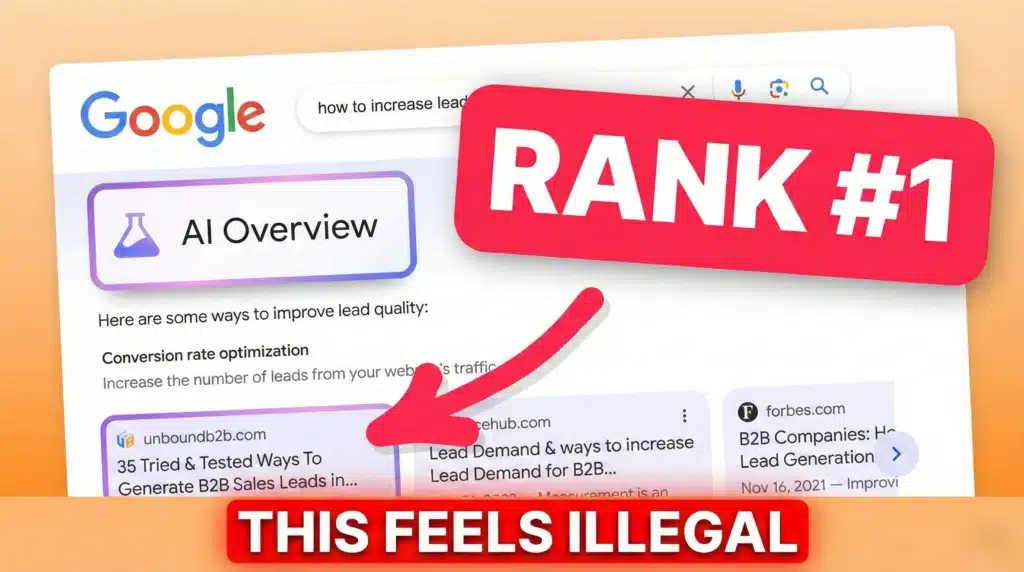
AI search builds on traditional SEO foundations. Skipping these fundamentals eliminates citation opportunities regardless of AI-specific optimizations.
Helpful, Reliable, People-First Content Standards
Google’s Search Essentials emphasize creating content primarily for humans rather than search engines. This principle applies even more strongly to AI systems that evaluate whether information genuinely helps users or exists solely for ranking manipulation.
Practical implementation requirements:
Author clarity: Display author names with credentials for expertise demonstration
Original experience: Include first-hand insights, not regurgitated competitor content
Accurate claims: Verify facts before publishing, especially statistics and dates
Clear purpose: Each page serves one defined user need without topic drift
Satisfying depth: Cover topics comprehensively enough to answer follow-up questions
AI systems prioritize content demonstrating Experience, Expertise, Authoritativeness, and Trustworthiness (E-E-A-T). Pages lacking author attribution, original insights, or factual accuracy get filtered before citation consideration begins.
Spam Risks to Avoid When Scaling Content
Google’s spam policies explicitly address scaled content abuse where sites generate hundreds of pages providing minimal unique value. AI optimization requires volume, but quantity cannot compromise quality standards.
Safe scaling rules content teams must follow:
Editorial oversight: Human review of AI-generated drafts before publishing
Differentiated pages: Each URL addresses distinct intent with unique insights
Unique value per page: Every page contributes original examples, data, or perspectives
No thin content: Minimum 800 words for informational guides, with substantive coverage
Quality over quantity: Publishing 10 excellent pages monthly outperforms 100 thin pages
AI platforms can detect content patterns indicating mass production without editorial care. Sites violating spam policies lose visibility in both traditional search and AI citations simultaneously.
Page Experience Still Matters
Poor user experience signals low investment in content quality. AI systems consider page experience metrics including Core Web Vitals, mobile responsiveness, and intrusive interstitial avoidance when evaluating source trustworthiness.
Technical requirements AI systems expect:
Loading speed: Largest Contentful Paint under 2.5 seconds
Interactivity: Interaction to Next Paint under 200 milliseconds
Visual stability: Cumulative Layout Shift under 0.1
Mobile optimization: Responsive design, readable text without zooming
HTTPS security: Encrypted connections for all pages
No intrusive elements: Avoid pop-ups blocking main content immediately
Pages failing Core Web Vitals thresholds signal poor user experience. AI platforms prioritize sources that load quickly and display cleanly across devices because these signals correlate with content quality and user satisfaction.
The Citeability Framework
Most content fails AI citation tests not because topics lack relevance but because formatting prevents clean extraction. The Citeability Framework transforms how content teams structure information for AI systems.
Use Direct Answer Blocks for Every Important Question
AI systems extract short passages answering queries directly. Content lacking clear, self-contained answers gets skipped because extraction accuracy drops when AI must interpret ambiguous text.
Direct answer block requirements:
Length: 40-60 words forming complete thought
Position: First paragraph under relevant heading or in introduction
Structure: Definition + conclusion + one supporting reason
Independence: Understandable without surrounding context
Boldness: Key phrase bolded for visual emphasis
Example – Good:
“ChatGPT Search ranks content through Bing’s index with 73% correlation to Bing traditional results. Optimization requires allowing GPTBot crawler access, creating citation-worthy depth with original research, and building authoritative third-party mentions on aggregator sites and industry lists.”
Example – Bad:
“There are many factors involved in ranking, and it depends on various things including how you structure content and what platforms you target, so results may vary.”
The good example provides specific, extractable information. The bad example uses vague language preventing clean citation.
Write in Entities and Attributes, Not Keywords
AI systems understand entities (real things like “Google Search Console”) and their attributes (properties like “provides performance data, tracks keyword rankings, identifies indexing issues”). Keyword repetition without attribute coverage signals thin content.
Entity-based writing process:
Identify primary entity: Main topic the page addresses
List core attributes: 5-10 properties users expect coverage of
Cover systematically: Definition, purpose, components, usage, common mistakes
Add relationships: How entity connects to related entities
Include examples: Concrete instances demonstrating each attribute
Example – Entity-based:
“Perplexity AI (entity) is an AI-powered search engine (attribute: category) that processes 100 million searches weekly (attribute: scale). The platform uses a custom index focused on authoritative sources (attribute: data source) and displays numbered citations in answers (attribute: citation style). Users can select focus modes including Web, Academic, and Social Media (attribute: features) to narrow results by content type.”
This approach covers entity attributes systematically. AI systems extract comprehensive understanding from this structure versus keyword-stuffed alternatives.
Start Your Keytomic Trial Today!
Don’t rely on guesswork and outdated SEO strategies. Let Keytomic automate your SEO workflows so you can focus on what matters most — your brand.
Generate Your 30-Day CalendarBook Your Demo
Cancel Anytime. 14-Day Money Back Guarantee.
Make Claims Attributable
AI platforms prioritize content with clear sourcing because unattributed claims cannot be verified. Citation-worthy content includes sources for statistics, dates for volatile facts, and explicit attribution for research findings.
Attribution requirements:
Statistics: Include source organization and publication date
Research claims: Cite study authors and year
Volatile information: Add “as of [date]” for facts that change
Primary sources: Link to original research, not secondary summaries
Stable citations: Use permanent URLs that remain accessible
Example – Properly Attributed:
“ChatGPT generates 800 million weekly users as of November 2025 according to OpenAI CEO Sam Altman. The platform’s search function uses Bing’s index, creating 73% correlation between Bing rankings and ChatGPT Search citations based on BrightEdge research published in August 2025.”
Example – Unattributed:
“ChatGPT has millions of users and works with search engines to find information, so optimizing helps visibility.”
Attributed claims allow AI systems to verify accuracy. Unattributed claims reduce trust and citation probability.
Citeability Checklist Per Section
Table: Content Section Citeability Requirements
Section Type | Must Include | Best Formatting | Common Mistake | AI Extraction Risk |
|---|---|---|---|---|
Definition | 40-60 word answer block, entity + 3 attributes | Bold key phrase, bullet point attributes | Circular definitions, vague language | High if ambiguous |
How-To Guide | Numbered steps (5-10), action verbs, expected outcome | Each step 15-25 words, sub-steps if complex | Steps too long, missing context | Medium if steps unclear |
Comparison | Side-by-side table, 5-7 comparison criteria, clear winner statement | Table intro + takeaway after | No conclusion, equal treatment | Low with tables |
Statistics | Specific numbers, source attribution, date context | Inline citation format, bold numbers | Round numbers without source | High if unsourced |
Examples | 2-3 concrete instances per concept | Separate paragraphs, “Example:” label | Generic examples, no details | Medium if vague |
This checklist operationalizes citeability principles. Content teams audit each section type against these requirements before publishing.
How to Rank in Google AI Overviews
Industry Insight
Google AI Overviews appear in 60% of search results as of November 2025. Optimization requires understanding what Google’s systems extract and display.
What AI Overviews Tends to Reward
AI Overviews prioritize three characteristics: breadth (comprehensive coverage addressing main query plus sub-questions), clarity (structured formatting enabling clean extraction), and trustworthy sourcing (authoritative citations and E-E-A-T signals).
Google explicitly states that appearing in AI Overviews requires no special optimization beyond standard Search Essentials compliance. Research shows 61% correlation between AI Overview sources and traditional page-one rankings, indicating traditional SEO remains foundational.
Specific signals Google’s AI evaluates:
Topical completeness: Coverage of 8-12 predictable sub-questions
Structural clarity: H2/H3 hierarchy, bullet points, numbered lists, tables
Source quality: Authoritative backlinks, brand mentions, expert authorship
Content freshness: Recent publication or update dates for volatile topics
User experience: Fast loading, mobile responsive, no intrusive elements
Intent matching: Content format (guide vs comparison vs list) matches query type
Sites ranking well traditionally with comprehensive, well-structured content earn AI Overview citations. Thin content ranking through manipulation gets filtered.
Page Patterns That Win AI Overviews Inclusion
AI Overviews extract from pages following predictable patterns. The “definition + steps + pitfalls + tools + FAQ” structure consistently earns citations because it addresses complete user intent.
Winning page structure template:
Introduction with 50-word answer block: Direct response to query
Definition section (H2): What is [topic], why it matters, core components
Implementation section (H2): Step-by-step guide with 5-10 numbered steps
Common mistakes section (H2): Pitfalls to avoid with examples
Tools and resources (H2): Recommended platforms with brief descriptions
FAQ section (H2): 5-8 questions addressing related intents
Conclusion: Summary with one actionable next step
This pattern works because it anticipates user journey from understanding to implementation to troubleshooting. AI systems extracting any section find complete, usable information.
How to Reduce the Chance of Being Skipped
AI Overviews skip content for three primary reasons: thin coverage (surface-level information without depth), unclear authorship (no credentials demonstrating expertise), and poor user experience (slow loading, mobile issues, intrusive ads).
Prevention checklist:
✓ Content exceeds 1,500 words for competitive queries
✓ Author byline present with relevant credentials
✓ Core Web Vitals pass all thresholds
✓ Mobile rendering displays correctly without horizontal scrolling
✓ No auto-playing videos or intrusive pop-ups
✓ Citations included for key statistics and claims
✓ Published or updated within last 12 months
✓ No duplicate content or thin rewrites
Running this checklist quarterly maintains AI Overview eligibility. Sites failing multiple criteria lose visibility despite ranking in traditional results.
How to Rank in ChatGPT and Other LLM Answers
ChatGPT with Search mode uses Bing’s index, creating different optimization requirements than Google AI Overviews.
The Three Levers LLMs Tend to Prefer
Large language models evaluating content for citations prioritize trusted brands (established domains with consistent publishing history), clean sub-question answers (content addressing predictable follow-ups), and consistent terminology (stable definitions maintained across pages).
Research shows 73% correlation between Bing search rankings and ChatGPT Search citations. This creates clear optimization path: improve Bing visibility to improve ChatGPT citations.
Priority optimization levers for ChatGPT:
Bing Webmaster Tools submission: Verify site ownership, submit sitemaps
GPTBot crawler access: Allow in robots.txt for content discoverability
Citation-worthy depth: Original research, case studies, proprietary data
Authoritative mentions: Featured on aggregator sites, review platforms, “best of” lists
Social proof signals: Active LinkedIn presence, Twitter/X thought leadership
Content freshness: Regular updates, “last modified” dates visible
ChatGPT Search pulls from Bing’s index but applies additional filters for source trustworthiness. Content ranking well in Bing without authority signals still gets filtered before citation.
How to Build LLM-Friendly Pages
LLM systems extract information more accurately from specific content formats. Pages optimized for LLM citation use glossary blocks (clear definitions with attributes), comparison tables (side-by-side analysis), and decision matrices (if X then Y guidance).
Optimal page elements for LLM extraction:
Glossary blocks: Define key terms with 3-5 attributes each
Example: “Domain Authority (DA): A Moz-developed metric (attribute: creator) predicting site ranking ability (attribute: purpose) scored 1-100 (attribute: scale) based on backlink profile quality and quantity (attribute: calculation method). Higher scores correlate with greater ranking potential (attribute: interpretation).”
Comparison tables: Side-by-side analysis with clear criteria
Example table comparing AI platforms by index source, update frequency, citation style, and best use cases enables clean extraction for comparison queries.
FAQ answers: Complete responses in 25-35 words
Example: “Q: Do I need different strategies for each AI platform? A: Yes. ChatGPT requires Bing optimization, Perplexity emphasizes authoritative lists, and AI Overviews prioritize traditional Google SEO signals. Multi-platform strategy essential.”
These formats allow LLMs to extract precise information without interpretation ambiguity.
How to Increase the Odds of Being Referenced
ChatGPT and similar platforms favor sources that other authoritative sites reference. Building citation probability requires publishing original research (proprietary data competitors lack), earning media mentions (PR coverage, podcast appearances), and systematic review optimization (Trustpilot, G2, Capterra profiles).
Authority building strategy:
Original research publication: Surveys, studies, benchmark data (publish quarterly)
Strategic PR outreach: Pitch unique insights to industry publications
Guest posting program: Write for high-authority domains (1-2 monthly)
Podcast circuit: Interview appearances demonstrating expertise (2-4 quarterly)
Review generation: Post-purchase email sequences requesting testimonials
Community participation: Reddit, industry forums with genuine value-add
This multi-channel approach creates authority signals AI platforms verify when evaluating source trustworthiness. Sites lacking third-party validation get filtered despite quality content.
Start Your Keytomic Trial Today!
Don’t rely on guesswork and outdated SEO strategies. Let Keytomic automate your SEO workflows so you can focus on what matters most — your brand.
Generate Your 30-Day CalendarBook Your Demo
Cancel Anytime. 14-Day Money Back Guarantee.
How to Rank in Perplexity AI
Industry Insight
Perplexity processes over 100 million searches weekly with 22 million active users. The platform uses a custom index emphasizing authoritative sources.
Perplexity’s Simpler Algorithm Focus
Research by First Page Sage reveals Perplexity uses one of the simplest recommendation algorithms among AI platforms, focusing primarily on three signals: authoritative list mentions (appearing on “best of” roundups), awards and accreditations (industry recognition), and online reviews (testimonials across platforms).
This creates clear optimization path distinct from ChatGPT and AI Overviews. Traditional SEO remains important but secondary to authority signals Perplexity specifically evaluates.
Priority optimization for Perplexity:
Target authoritative lists: Identify “Top 10” and “Best of” articles in your niche
Pitch inclusion: Outreach to publishers maintaining these lists
Optimize review profiles: Yelp, Trustpilot, G2, Capterra depending on business type
Pursue industry awards: Apply for relevant certifications and recognitions
Display credibility badges: Show awards, certifications prominently on site
Perplexity weights these authority signals heavily when selecting sources. Content quality matters but authority signals determine initial eligibility for citation consideration.
User-Generated Content and Reddit Strategy
Perplexity values user-generated content including Reddit discussions more than other AI platforms. When asked about ranking, Perplexity acknowledges balancing user-generated content with authoritative websites for comprehensive answers.
Reddit optimization strategy for Perplexity:
Identify relevant subreddits: Find communities discussing your industry
Genuine participation: Answer questions with expertise, not promotion
Build reputation: Consistent helpful contributions over months
Natural brand mentions: Others reference your solutions organically
Link when appropriate: Share resources only when genuinely helpful
This approach builds credibility Perplexity validates through multiple Reddit mentions across different discussions and users.
Content Format Perplexity Extracts Best
Perplexity displays answers with numbered citations. Content optimized for Perplexity emphasizes tables for comparisons (spec sheets, pricing, features), bulleted feature lists (scannable benefits), and statistics prominently (data in first 200 words).
Example – Perplexity-optimized section:
AI Platform Comparison
[One-sentence intro]: The following table compares major AI search platforms by core characteristics.
Platform | Index Source | Update Frequency | Citation Style | Best For |
|---|---|---|---|---|
ChatGPT | Bing + Training Data | Real-time in Search mode | Inline citations | Detailed queries |
Perplexity | Custom authoritative index | Real-time | Numbered citations | Research queries |
AI Overviews | Google Search | Real-time | Link cards | Broad visibility |
[Takeaway]: ChatGPT serves detailed information needs, Perplexity excels at research, and AI Overviews maximize broad visibility.
This table structure enables Perplexity to extract precise comparisons. The intro and takeaway provide context AI includes in synthesized answers.
Content Strategy for AI Search
Strategic content planning determines long-term AI visibility success. Reactive publishing without systematic planning produces inconsistent citations.
Build a Cluster Map That Matches Fanout Questions
Query fanout requires content addressing the main query plus 12-20 supporting sub-questions through dedicated pages. The cluster map approach creates pillar pages (comprehensive guides on broad topics) and cluster pages (detailed coverage of specific sub-topics).
Cluster map construction process:
Select pillar topic: Broad high-value query (example: “AI SEO”)
Generate fanout questions: 15-25 sub-questions users ask (example: “how to rank in ChatGPT”)
Map cluster pages: One page per sub-question with 1,500-2,500 words
Internal linking structure: Pillar links to all clusters, clusters link to pillar and related clusters
Content calendar: Publish 1-2 cluster pages weekly until complete
This structure answers user questions comprehensively. AI systems can extract from pillar or cluster pages depending on query specificity, increasing total citation opportunities.
For practical programmatic SEO implementation at scale, content teams can reference Complete Guide to Programmatic SEO for Content Teams for systematic workflows creating hundreds of complementary pages efficiently.
Update Strategy Beats Publish-Only Strategy
Content decay reduces AI citations over time as statistics become outdated, competitors publish fresher content, and platform algorithms favor recent information. Systematic refresh workflows maintain visibility.
Content refresh schedule by type:
Statistics pages: Monthly updates with current data
How-to guides: Quarterly updates for screenshots, tool changes
Best practices: Bi-annual updates for emerging trends
Evergreen guides: Annual comprehensive refresh
Competitive comparisons: Quarterly updates when competitors launch features
Implementing refresh triggers prevents citation loss. Track citation frequency monthly. When citations decline for previously successful pages, schedule immediate refresh prioritizing updated statistics, new examples, and current tool recommendations.
Cluster Plan Template
Cluster Topic | Target Query | Intent | Winning Angle | Supporting Assets | Update Cadence |
|---|---|---|---|---|---|
AI Overview optimization | how to rank in AI Overviews | Informational | Platform-specific tactics | Screenshots, examples | Quarterly |
ChatGPT SEO | how to rank in ChatGPT | Informational | Bing optimization focus | Bing Webmaster guide | Quarterly |
Perplexity ranking | rank in Perplexity AI | Informational | Authority building | List placement guide | Bi-annual |
Citation tracking | measure AI visibility | Informational | Tracking methodology | Spreadsheet template | Annual |
This template operationalizes cluster strategy. Content strategists assign owners, track publication progress, and schedule refresh cycles systematically.
Technical SEO for AI Visibility
Technical foundations determine whether AI platforms can access, crawl, and extract content. Perfect content remains invisible with technical barriers blocking discovery.
Indexability, Crawl Efficiency, and Canonical Sanity
AI platforms use specialized crawlers including GPTBot (ChatGPT), PerplexityBot (Perplexity), and Google-Extended (Google AI). Content must be discoverable, crawlable, and properly consolidated through canonical tags.
Technical requirements checklist:
Robots.txt configuration: Explicitly allow AI crawler user agents
Server-side rendering: JavaScript-heavy sites must render for crawlers
Canonical URLs: Consolidate duplicate content properly
XML sitemap: Include priority pages, submit to Bing Webmaster Tools
HTTPS implementation: Secure all pages site-wide
Mobile responsiveness: Pass mobile-friendly test
Page speed optimization: Core Web Vitals compliance
No crawler blocks: Remove unintentional disallow rules
Robots.txt example allowing AI crawlers:
Verify crawler access through server log analysis. AI bots not appearing in logs indicate blocking preventing content discovery.
Structured Data That Improves Understanding
Schema markup helps AI systems parse content structure and understand entity relationships. Properly implemented structured data increases extraction accuracy though does not guarantee rich results.
Priority schema types for AI:
Article schema: Signals content type, publication date, author
FAQ schema: Identifies question-answer pairs for extraction
HowTo schema: Marks step-by-step instructions
Organization schema: Establishes brand identity and attributes
Person schema: Demonstrates author expertise
BreadcrumbList schema: Shows content hierarchy
Implement schema following Google’s structured data guidelines. Validate using Rich Results Test before deploying. Structured data provides AI systems explicit understanding of content organization and entity relationships.
Internal Linking for Entity Reinforcement
Strategic internal linking strengthens entity understanding across site. AI platforms evaluate how comprehensively sites cover entities and their attributes. Strong internal linking creates content hubs (clusters of related pages) reinforcing topical authority.
Internal linking strategy:
Hub pages: Comprehensive guides linking to 10-15 supporting pages
Definition pages: Glossary entries defining key entities
Comparison pages: Side-by-side analysis linking to individual option pages
Attribute pages: Deep-dives on specific entity properties
Contextual links: Descriptive anchor text matching destination topics
Link from pillar to clusters bidirectionally. This creates clear content graph AI platforms use to understand topical breadth and depth.
For detailed domain authority metrics understanding, content teams can review What is Domain Rating (DR) and Why It Matters for authority signal optimization.
Measuring AI Visibility Without Guessing
Citation tracking transforms AI optimization from guesswork into systematic measurement. Most teams lack visibility measurement frameworks, creating optimization blind spots.
The Visibility Score You Can Run Weekly
AI visibility scoring tracks four dimensions: inclusion (appearing as cited source), citation prominence (display position and length), query coverage (percentage of priority queries citing you), and competitive position (citations versus competitors).
Weekly visibility score calculation:
Select 30-50 priority queries: High-value searches matching your expertise
Test across platforms: ChatGPT, Perplexity, AI Overviews, Gemini
Record inclusion: Binary yes/no for each query/platform combination
Track prominence: Citation position (1-8), quote length if applicable
Compare competitors: Note which competitors appear when you don’t
Calculate score: (Your citations ÷ Total tests) × 100 = Visibility %
Example calculation:
Priority queries: 40
Platforms tested: 3 (ChatGPT, Perplexity, AI Overviews)
Total tests: 120 query-platform combinations
Your citations: 32
Visibility score: 26.7%
Track weekly. Month-over-month trends reveal optimization impact more reliably than single measurements.
A Practical Tracking Workflow
Systematic citation monitoring requires structured processes preventing ad-hoc testing inefficiency. The four-week tracking cycle balances thoroughness with resource constraints.
Week 1: Baseline establishment
Document 30-50 priority queries
Test each query across 3-4 major platforms
Record results in tracking spreadsheet
Identify competitors appearing frequently
Week 2: Content gap analysis
Analyze queries where you lack citations
Review competitor content earning citations
Identify missing topics, depth, or formats
Prioritize content creation based on citation potential
Week 3: Optimization implementation
Publish new content targeting gaps
Refresh existing pages missing citations
Implement citeability framework improvements
Update internal linking structure
Week 4: Re-test and measurement
Test same 30-50 queries across platforms
Calculate visibility score change
Identify which improvements drove results
Document winning patterns for replication
This cycle creates continuous improvement. Successful patterns get systematized. Failed experiments get documented to avoid repetition.
AI Visibility Tracker Template
Table: AI Citation Tracking Spreadsheet
Query | Platform | Your Inclusion | Citation Present | Position | Competitor Cited | Notes | Next Action |
|---|---|---|---|---|---|---|---|
AI SEO optimization | ChatGPT | Yes | Direct quote | 3rd citation | CompetitorA (1st) | Need more Bing authority | Build list mentions |
rank in Perplexity | Perplexity | No | – | – | CompetitorB, CompetitorC | Missing authority signals | Target review sites |
AI Overviews tips | Google AIO | Yes | Paraphrase | Link card 5 | – | Good existing coverage | Maintain freshness |
ChatGPT ranking | ChatGPT | No | – | – | CompetitorA, CompetitorD | Content exists but thin | Expand to 2500 words |
This template operationalizes tracking. Teams identify patterns (which platforms, which queries, which competitors) informing strategic priorities.
For comprehensive keyword research fundamentals, content teams benefit from What Is Keyword Difficulty (KD) And How To Actually Use It for competitive assessment frameworks.
Why Content Teams Choose Keytomic for AI Search Automation
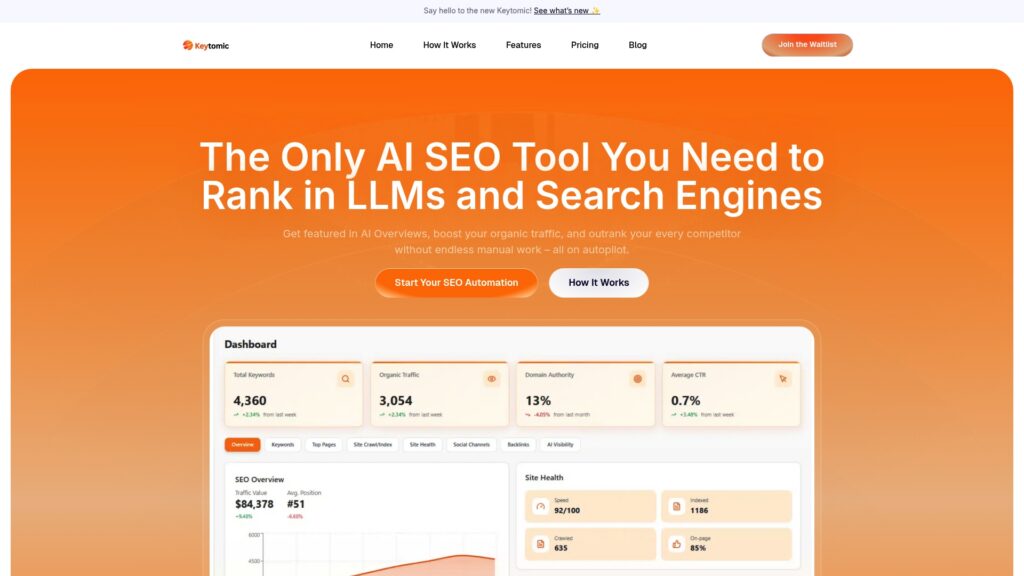
Manual AI citation tracking across ChatGPT, Perplexity, Google AI Overviews, and Gemini creates operational bottlenecks. Testing 50 queries across 4 platforms weekly requires 200 manual searches consuming 6-8 hours monthly. Scaling beyond 50 queries becomes unsustainable without automation.
Keytomic provides AI search automation infrastructure specifically designed for content teams tracking citations systematically. The platform handles repetitive testing, competitive monitoring, and trend analysis that manual processes cannot scale.
The Challenge: Multi-Platform Citation Complexity
Content teams optimizing for AI search face four operational challenges:
Manual tracking limitations: Testing more than 50 queries manually becomes time-prohibitive. Teams need visibility across 200-500 priority queries for comprehensive coverage.
Multi-platform complexity: Each AI platform has unique ranking factors. ChatGPT requires Bing optimization, Perplexity emphasizes authoritative lists, AI Overviews prioritize traditional SEO. Coordinating optimization across platforms manually introduces errors.
Content refresh burden: Maintaining freshness across hundreds of pages requires systematic scheduling. Manual tracking misses refresh triggers.
Attribution difficulty: GA4 shows referral traffic from perplexity.ai and chat.openai.com but cannot attribute citations to specific content or queries without manual correlation.
How Keytomic Automates AI Search Workflows
Keytomic automates citation tracking, content analysis, technical auditing, and refresh scheduling that manual processes struggle to maintain consistently.
Multi-platform citation monitoring:
Automated testing: 500-1,000 queries daily across ChatGPT, Perplexity, AI Overviews, Gemini
Historical trending: Track citation changes over weeks and months
Competitive comparison: Monitor competitor citations automatically
Alert system: Notifications when citations drop for priority queries
AI-optimized content analysis:
Citeability scoring: Evaluate content against extraction-friendly formatting
Entity coverage assessment: Identify missing attributes for primary entities
Answer block detection: Flag pages lacking 40-60 word snippet-ready answers
Multi-platform suitability: Score content fit for each AI platform’s preferences
Technical AI crawler validation:
Robots.txt monitoring: Verify AI crawler access remains enabled
Structured data checking: Validate schema markup implementation
Page speed alerts: Flag Core Web Vitals failures affecting citations
Mobile rendering tests: Ensure proper display across devices
Systematic content refresh automation:
Scheduled audits: Automatic content reviews based on age and performance
Citation loss triggers: Refresh alerts when previously cited pages drop
Competitive monitoring: Notifications when competitors publish new content
Update tracking: Document what changed, when, and impact on citations
Comprehensive reporting dashboard:
Visibility trends: Citation rates over time by platform
Share of Voice: Your citations versus competitors by topic cluster
Traffic attribution: Referral traffic from AI platforms to specific pages
ROI calculation: Citation improvements correlated with conversions
Keytomic vs Manual AI Search Optimization
Manual approaches cannot match automation scale and consistency. The comparison reveals efficiency gaps manual processes create.
Activity | Manual Time | Keytomic Time | Savings |
|---|---|---|---|
Test 50 queries across 4 platforms | 6-8 hours/month | 10 minutes setup | 95% |
Test 500 queries across 4 platforms | Impossible | Automated daily | 100% |
Competitive citation tracking | 4-6 hours/month | Automated continuous | 90% |
Content refresh scheduling | 2-3 hours/month | Automated triggers | 85% |
Technical crawler auditing | 1-2 hours/month | Automated continuous | 88% |
Reporting compilation | 3-4 hours/month | Real-time dashboard | 95% |
Annual time savings exceed 400-600 hours for mid-sized content teams. At $50-65/hour internal cost, automation saves $20,000-$40,000 annually while dramatically improving monitoring coverage.
Who Benefits Most from Keytomic
Ideal users: Content teams publishing 20+ articles monthly, agencies managing 5-10 clients, in-house SEO teams tracking 200+ keywords, B2B SaaS companies in competitive markets, e-commerce brands with large catalogs.
Not ideal for: Blogs with fewer than 10 articles, businesses lacking traditional search visibility, teams preferring complete manual control, single-platform-only strategies.
Getting Started with AI Search Automation
Keytomic implementation follows four-week timeline:
Week 1: Platform connection (Google Search Console, GA4, CMS), initial citation audit across platforms, priority query identification
Week 2: Content analysis for citeability, entity coverage gaps, technical barrier identification, competitive benchmark establishment
Week 3: Tracking dashboard configuration, alert threshold setting, refresh schedule creation, team member access provisioning
Week 4+: Ongoing automated monitoring, weekly insight reports, citation trend analysis, optimization recommendations
Explore Keytomic for AI search optimization or book a demo to see citation tracking automation.
Start Your Keytomic Trial Today!
Don’t rely on guesswork and outdated SEO strategies. Let Keytomic automate your SEO workflows so you can focus on what matters most — your brand.
Generate Your 30-Day CalendarBook Your Demo
Cancel Anytime. 14-Day Money Back Guarantee.
Frequently Asked Questions
What is AI SEO?
AI SEO is the practice of optimizing content for AI-powered search platforms including ChatGPT, Perplexity, and Google AI Overviews that synthesize answers from multiple sources. Unlike traditional SEO focusing on rankings, AI SEO emphasizes becoming a cited source through entity-based content, structured formatting, and authoritative third-party mentions. Success requires citation-worthy depth with original research and systematic visibility tracking.
How to rank in AI Overviews?
Optimize for traditional Google SEO first because 61% of AI Overview sources come from page-one rankings. Create comprehensive content addressing the main query plus 8-12 sub-questions users ask next. Structure with clear H2/H3 headings, 40-60 word answer blocks, bullet points, numbered lists, and comparison tables. Maintain fast page speed, mobile responsiveness, and author credentials demonstrating expertise.
How to rank in ChatGPT?
ChatGPT Search uses Bing’s index showing 73% correlation with Bing rankings. Submit your site to Bing Webmaster Tools and allow GPTBot crawler in robots.txt. Create citation-worthy content with original research, case studies, and specific data points. Build authoritative third-party mentions through inclusion on “best of” lists, affiliate sites, and review platforms. Optimize for Bing-specific ranking factors including social signals.
How to rank in LLMs?
Large language models prioritize trusted brands, clean sub-question answers, and consistent terminology across pages. Publish source-quality content that other authoritative sites reference. Structure information using glossary blocks, comparison tables, and complete FAQ answers of 25-35 words. Build authority through PR mentions, podcast appearances, industry awards, and systematic review generation across relevant platforms.
Does schema markup help AI answers?
Yes. Structured data helps AI systems parse content structure and understand entity relationships, improving extraction accuracy. Implement Article, FAQ, HowTo, Organization, and Person schema following Google’s guidelines. Schema markup does not guarantee rich results but enables AI platforms to extract information more reliably. Validate implementation using Rich Results Test before deploying to ensure proper syntax.
How do you measure AI visibility?
Track citations systematically using 30-50 priority queries tested weekly across ChatGPT, Perplexity, AI Overviews, and Gemini. Calculate visibility score as (your citations divided by total tests) times 100. Monitor four dimensions: inclusion (appearing as source), prominence (citation position), query coverage (percentage citing you), and competitive position (versus competitors). Tools like Keytomic automate tracking at scale beyond manual capacity.
Can AI Overviews reduce clicks and what should you do?
Yes. AI Overviews can reduce traditional organic clicks by providing direct answers. Research shows 60% of searches with AI Overviews generate zero clicks to external sites. Strategy shift required: focus on brand awareness and authority building through citations rather than only click-through traffic. Citations build trust that drives conversions through other channels. Track referral traffic quality metrics showing AI traffic converts higher than traditional organic.
What is the difference between SEO and AI SEO?
Traditional SEO optimizes for ranking positions in blue-link search results through keyword targeting, backlinks, and technical optimization. AI SEO optimizes for citations in AI-generated answers through entity coverage, structured formatting, and source credibility. Both require strong technical foundations but AI SEO emphasizes extraction-friendly content, authoritative mentions, and multi-platform visibility tracking versus ranking-focused metrics.
Which AI platform should I optimize for first?
Google AI Overviews provides broadest reach appearing in 60% of searches with 8.5 billion daily Google queries. Start here because optimization overlaps heavily with traditional SEO (61% correlation). ChatGPT offers second-highest volume with 800 million weekly users and clear Bing optimization path. Perplexity targets professional audiences with 30% senior leadership users. Prioritize based on where your target audience searches.
How long does AI SEO take to show results?
Well-established sites with existing authority see citations within 3-6 months. New sites without domain authority require 6-12 months building foundational signals. Early indicators include citation appearances (1-3 months), referral traffic growth (2-4 months), and conversion attribution (4-6 months). Track Share of Voice monthly to measure progress. Teams implementing systematic frameworks consistently see 20-30% quarterly citation growth after initial establishment period.
What content formats get cited most by AI?
AI platforms extract most accurately from tables (comparison data), numbered lists (step-by-step guides), bullet points (features and benefits), FAQ sections (direct question-answers), and definition blocks (40-60 word summaries). Research shows FAQ-formatted content earns citations 2.8 times more frequently than narrative paragraphs. Combine multiple formats within single pages for maximum citation coverage across different query types.
Should I block AI crawlers to prevent content scraping?
No. Blocking AI crawlers eliminates citation opportunities and brand visibility that AI-generated answers provide. AI platforms include source attribution links generating referral traffic and brand awareness. Focus on creating original, citation-worthy content demonstrating expertise rather than blocking access. If concerned about training data usage specifically, allow search crawlers (GPTBot, PerplexityBot) while blocking training crawlers (Google-Extended) selectively through targeted robots.txt rules.
Your AI Search Optimization Roadmap
AI search represents fundamental shift from ranking optimization to citation optimization. Content teams must adapt from creating pages that rank first to creating pages that AI systems trust as authoritative sources worth referencing repeatedly.
Success requires executing three strategic pillars simultaneously: becoming the best source through citation-worthy depth and original research, building authority signals that AI platforms verify through third-party mentions and reviews, and systematic measurement tracking citations across platforms to identify winning patterns.
Traditional SEO remains foundational. Research shows 73% correlation between Bing rankings and ChatGPT citations, plus 61% correlation between Google rankings and AI Overview sources. Teams cannot skip SEO basics while pursuing AI-specific tactics. Technical excellence, comprehensive content, and authoritative backlinks matter for both traditional and AI search.
Platform-specific strategies optimize efficiency. ChatGPT requires Bing focus and authoritative list inclusion. Perplexity emphasizes review platforms and awards. AI Overviews prioritize traditional Google signals with extraction-friendly formatting. Multi-platform approaches diversify visibility reducing dependence on single channels.
Salam Qadir
Product & Growth Lead
Salam is an award-winning SEO & marketing strategist with over 5 years of experience helping SaaS companies dominate search rankings.
Limited Offer

Get Ranked, and Cited Where Matters!
Turn your website into organic growth and leads on auto-pilot!
Keyword research
CMS integrations
AI visibility tracking
SEO health audit